


A massive global war is raging over the future of artificial intelligence, information flows, and whose corporations will control it all. France is currently losing this war badly. One of the last cards they have to play was used yesterday…an act of revenge.
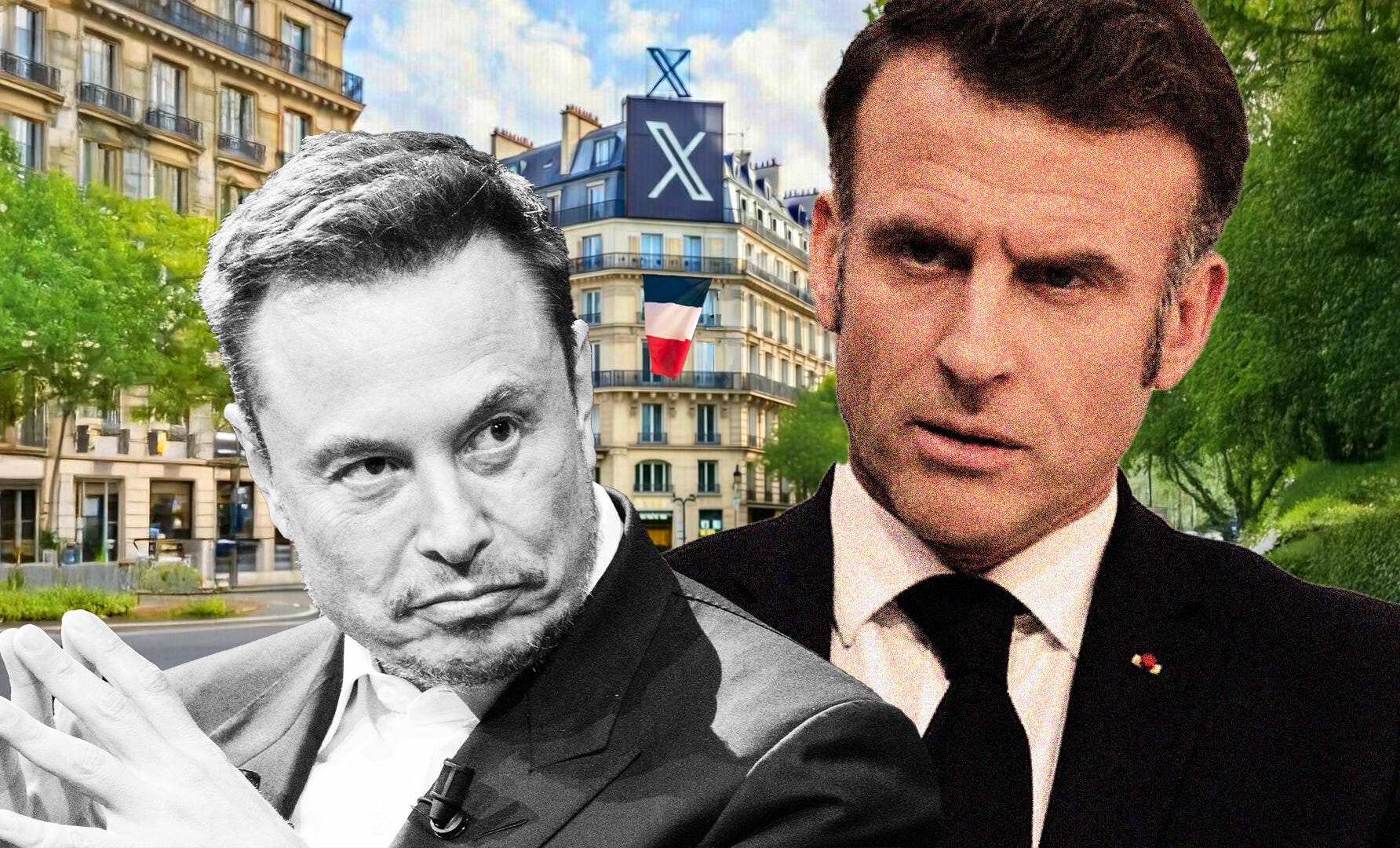
French cybercrime units stormed X’s Paris offices in a dramatic swoop, seizing devices and grilling staff as part of a sprawling probe they claim is looking into algorithm manipulation, fraudulent data grabs, and the spread of deepfakes and child abuse material. Prosecutors have summoned X owner billionaire Elon Musk for questioning in April.
X is branding the whole thing as an attempt to crush free speech, while Elon himself says it is a blatant “political attack.”
WHAT’S REALLY GOING ON? A HISTORY OF U.S. PRESSURE ON FRENCH COMPANIES
At 8pm on April 14, 2013, French citizen Frédéric Pierucci arrived at New York’s JFK airport for a routine business trip on a Cathay Pacific flight from Singapore. Pierucci was working at the time as a top executive at the jewel of France’s nuclear industry, Alstom.
The moment he stepped out of the Boeing 777 and onto the jet bridge he was arrested by FBI agents. Pierucci was brought before a judge and charged with bribery under the Foreign Corrupt Practices Act related to a giant Alstom $375 million energy deal in Indonesia.
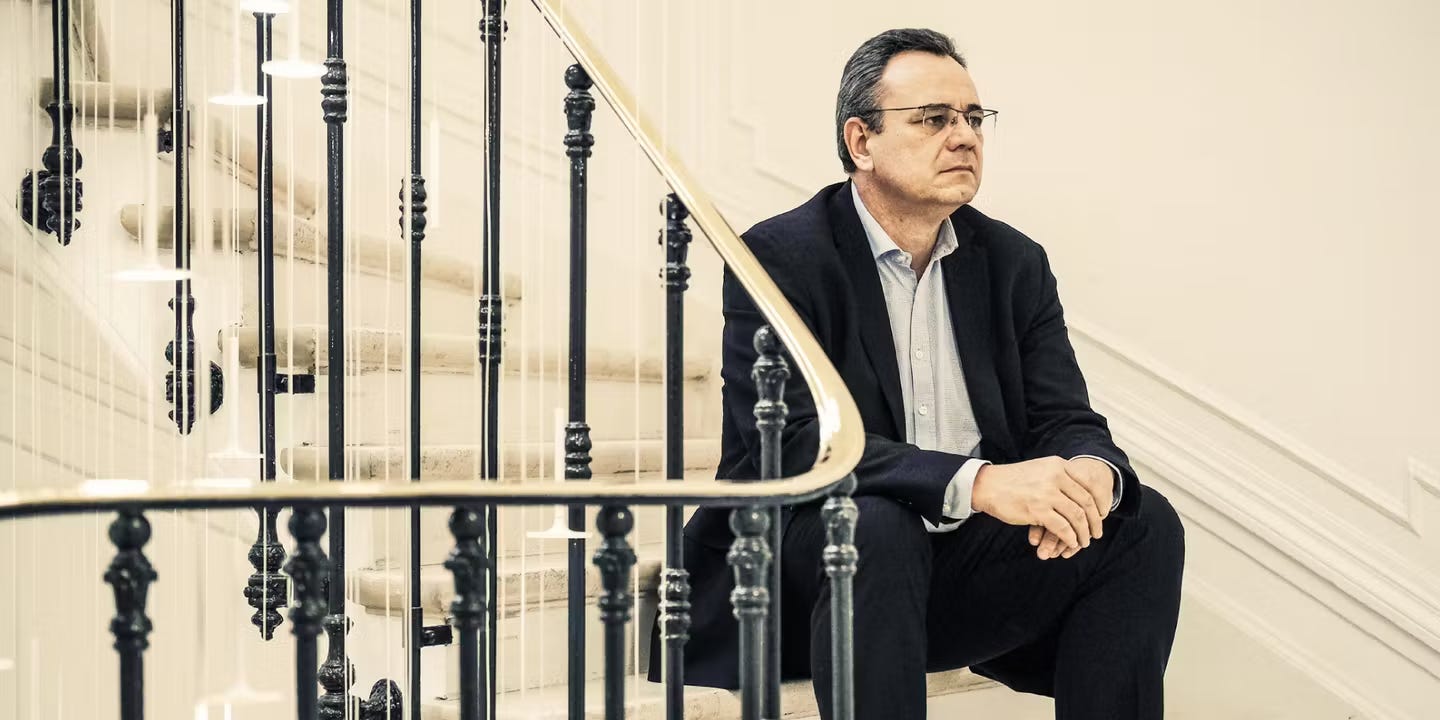
He was was denied bail and held in a high-security U.S. prison for over two years. While detained, Pierucci claims the U.S. used the ongoing investigation and massive potential fines to pressure Alstom into selling its power and grid businesses (including nuclear assets) at a discount to American company General Electric in a $17 billion deal announced in 2014 and completed in 2015.
Alstom eventually paid a record $772 million fine in late 2014 to settle the corruption case, and Pierucci pleaded guilty in 2013 but served most of his time pretrial before being sentenced in 2017 to 30 months (effectively time served plus release).

To win the lucrative Indonesian energy contracts Alstom admitted it paid millions in bribes to Indonesian officials, including a high-ranking member of Parliament and senior PLN executives (PLN is Indonesia’s state-owned electricity utility). Interestingly, no U.S. firms had bid on the Indonesian energy contracts in question.
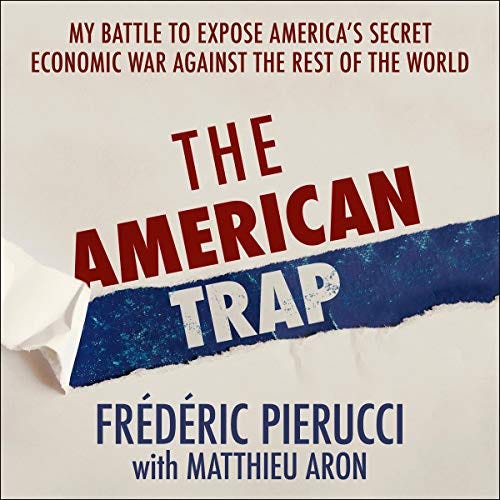
In his blockbuster book detailing what happened to him called The American Trap: My Battle To Expose America’s Secret Economic War Against The Rest Of The World, Pierucci describes the ordeal as “economic hostage-taking.” He argued the U.S. weaponized its anti-bribery laws to help GE acquire a key French strategic asset rather than purely pursuing justice.
French politicians agreed.
Arnaud Montebourg was the Economy Minister when Pierucci was nabbed by the FBI in 2013. He strongly opposed GE’s takeover of Alstom, viewing it as a loss of French industrial sovereignty in strategic sectors. Montebourg described what happened as a “national wound.”
Current French president Emmanuel Macron was Economy Minister when the deal was finally approved. He acknowledged there was a “causal link” between the U.S. investigation/fines and the sale.
NUCLEAR WASN’T FRANCE’S ONLY STRATEGIC INDUSTRY TARGETED BY AMERICA
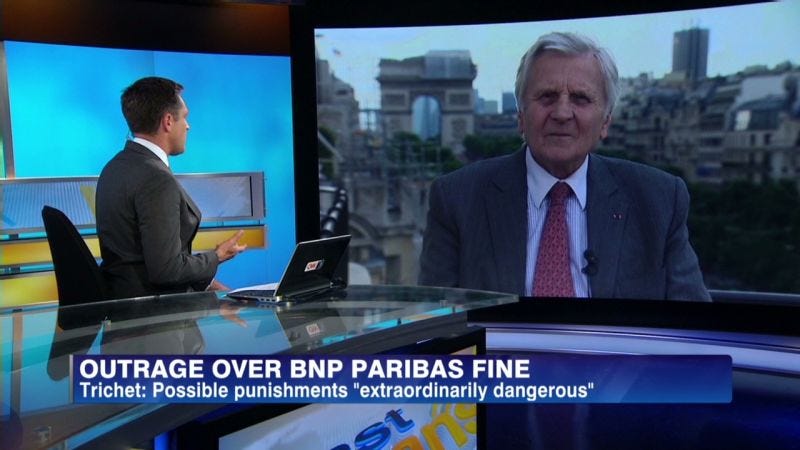
Back in 2009 U.S. law enforcement began an investigation targeting France’s largest bank, BNP Paribas. At the time the bank was the fifth-largest in the world by total assets. It was also larger than any of its U.S. competitors.
The U.S. accused BNP Paribas of sanctions violations involving Sudan, Iran and Cuba. Ultimately in 2014 the bank was hit with a record fine of $8.97 billion. It remains the largest penalty for sanctions violations in American history.
Today BNP Paribas is ranked eighth in the world by total assets, sliding down from fifth. Two U.S. banks—JPMorgan Chase and Bank of America—are now slotted ahead, in fifth and sixth places respectively.
To add insult to injury, since 2014 U.S. investors (companies or funds) have acquired or gained control of 1,600+ French companies. This represents more than $130 billion-worth of transactions. Corporate France is dying.
FRANCE IS IN A REVOLUTIONARY MOMENT
All of this corporate upheaval is taking place while France is in the midst of a revolutionary moment.
France is trapped in a never-ending political dumpster fire.
In just the last two years, three entire national governments have spectacularly collapsed (Barnier in December 2024, Bayrou in September 2025, and Lecornu in October 2025) because nobody can agree on how to stop the country from hemorrhaging money with massive debt and reckless spending.
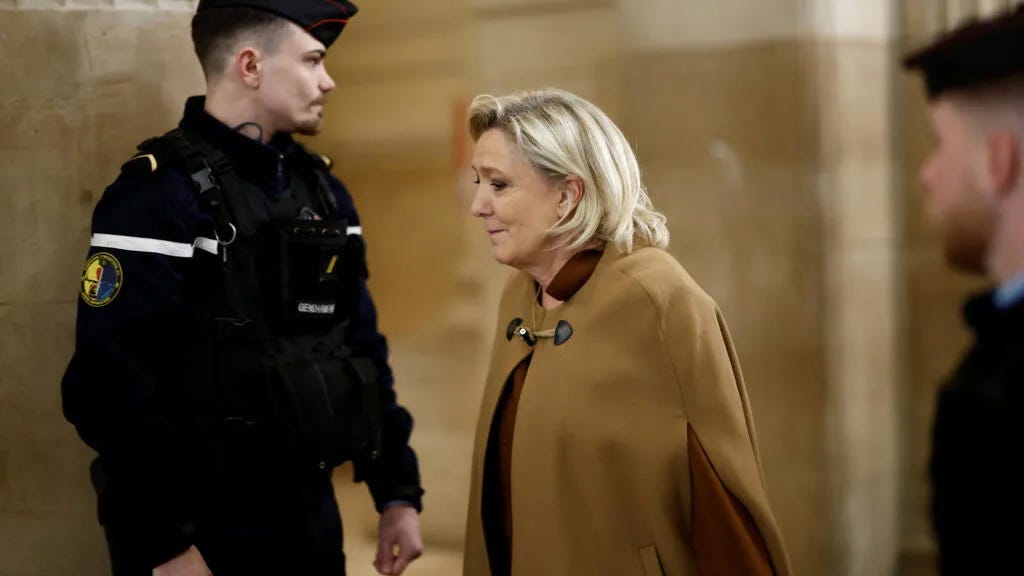
Meanwhile Marine Le Pen, the leader of National Rally, France’s most popular political party, is facing a potential five-year ban from holding public office due to an embezzlement conviction. She says it’s a “witch hunt” designed to prevent her from running in 2027. Her party has long been labeled “far right” by establishment media while Le Pen herself describes it as “nationalist” and “populist right.” Echoes of Trump’s political messaging.
Demographically the country is in very serious trouble. Last year its native birth rate plummeted to a historic low. There were more deaths than births for the first time since 1945. This means population growth now depends entirely on migration, fueling intense cultural and racial debates. What does it mean to be French now?

France is proudly secular, and yet Islam is growing ever more strident. Can the two systems cooperate, along with the 50% of the population who remain Christian?
The societal problems are serious enough that in 2021 about 1,000 active military and 20 retired generals signed an open letter warning President Emmanuel Macron of a "deadly civil war" due to "Islamism and the hordes of the banlieue"—the poor immigrant suburbs that surround French cities.
FRANCE WAS WAITING TO HIT THE U.S. BACK; MUSK PROVIDED THE OPPORTUNITY
It is with the backdrop of these economic and societal storms that the raid on X in Paris took place yesterday. For years French media outlets have lamented the lack of serious pushback by France against the U.S.
That all changed yesterday.
There are plenty of genuine rationales for the raid on X’s Paris HQ—online safety concerns, Big Tech regulation, personal data protections—but you cannot rule out the most base of human motivations:
REVENGE.